top of page
MOHAMED ESSMAT

Follow me


IT Director | Leader Technology | Global CIO 200 Award Winner


When a critical control fails, who fixes it, who tests the fix, and who makes sure leadership knows what’s still exposed?
When a critical control fails, who fixes it, who tests the fix, and who makes sure leadership knows what’s still exposed? Those are three different responsibilities. When the boundaries are unclear, several teams can track the same issue while the decision that would resolve it sits unassigned. Here’s how 15 risk management roles fit across eight responsibility areas. Enterprise & Operational Risk : Monitor exposure against risk appetite, track key risk indicators, and escala

Mohamed Essmat
Nov 101 min read


𝗔𝗜 𝗚𝗼𝘃𝗲𝗿𝗻𝗮𝗻𝗰𝗲 𝗢𝗽𝗲𝗿𝗮𝘁𝗶𝗻𝗴 𝗠𝗼𝗱𝗲𝗹: 𝗙𝗿𝗼𝗺 𝗣𝗼𝗹𝗶𝗰𝘆 𝘁𝗼 𝗣𝗿𝗮𝗰𝘁𝗶𝗰𝗲
𝗔𝗜 𝗚𝗼𝘃𝗲𝗿𝗻𝗮𝗻𝗰𝗲 𝗢𝗽𝗲𝗿𝗮𝘁𝗶𝗻𝗴 𝗠𝗼𝗱𝗲𝗹: 𝗙𝗿𝗼𝗺 𝗣𝗼𝗹𝗶𝗰𝘆 𝘁𝗼 𝗣𝗿𝗮𝗰𝘁𝗶𝗰𝗲 🚀 When an AI system makes a decision that affects your business, who is accountable, and who has the authority to stop it? An AI Governance Operating Model makes those answers clear. It translates governance principles into responsibilities, approval processes, controls, and everyday decisions. Here is a practical structure I would use: 🔹 𝟭. 𝗗𝗶𝗿𝗲𝗰𝘁𝗶𝗼𝗻 & 𝗢𝘃𝗲𝗿𝘀�
Mohamed Essmat
Oct 172 min read


🎯 COBIT Explained in 5 Minutes
🎯 COBIT Explained in 5 Minutes Every technology investment should answer three questions: ✅ What business value will it deliver? ✅ What risks must we manage? ✅ Who is accountable for the results? COBIT helps organizations connect those answers. Here is a practical introduction for IT leaders. 👇 1️⃣ WHAT IS COBIT? Developed by ISACA, COBIT is a framework for the governance and management of enterprise information and technology. It helps organizations align technology decisi
Mohamed Essmat
Oct 142 min read


🔍 Mapping ISO/IEC 42001 with NIST AI RMF: Connecting AI Governance to Risk Management
🔍 Mapping ISO/IEC 42001 with NIST AI RMF: Connecting AI Governance to Risk Management As organizations adopt AI, leaders need clear accountability, practical risk assessments, and evidence that controls work. ISO/IEC 42001 and the NIST AI Risk Management Framework can support this through complementary approaches: 🔹 ISO/IEC 42001 establishes requirements for an Artificial Intelligence Management System (AIMS), embedding governance and continual improvement into organization
Mohamed Essmat
Oct 122 min read


🔍 ISO/IEC 42001 Deep Dive: Turning Responsible AI into Everyday Practice
🔍 ISO/IEC 42001 Deep Dive: Turning Responsible AI into Everyday Practice When AI influences business decisions, accountability needs to be clear. Who approves its use? Who evaluates its risks? Who monitors its impact, and who intervenes when something goes wrong? ISO/IEC 42001:2023 provides requirements for an Artificial Intelligence Management System (AIMS), helping organizations govern how they develop, provide, and use AI responsibly. It applies to organizations using AI,
Mohamed Essmat
Oct 82 min read


🚨 Cybersecurity maturity is tested at the handoffs between teams.
🚨 Cybersecurity maturity is tested at the handoffs between teams. An alert without an owner. A critical vulnerability without a remediation deadline. A recovery plan that has never been tested. These gaps can turn a technical incident into a business crisis—even when individual teams have strong tools and capable people. Effective cybersecurity requires an operating model that connects protection, detection, response, governance, and recovery. The visual highlights 12 interc
Mohamed Essmat
Oct 32 min read


The value of assurance depends on whether it addresses the risks that could prevent the organization from achieving its objectives.
The value of assurance depends on whether it addresses the risks that could prevent the organization from achieving its objectives. For risk and audit leaders, this means looking beyond individual controls to understand how risks connect across the enterprise. Faster change, interconnected suppliers, evolving regulation, AI adoption and growing reliance on digital services are widening the scope of assurance. Traditional assurance remains essential. Its effectiveness depends
Mohamed Essmat
Oct 22 min read


🔐 Tokenization, Encoding, and Encryption: Three Different Purposes Every IT Leader Should UnderstandData that looks unreadable is not necessarily secure.
🔐 Tokenization, Encoding, and Encryption: Three Different Purposes Every IT Leader Should Understand Data that looks unreadable is not necessarily secure. Confusing these three concepts can lead to weak security controls, unnecessary exposure, and a false sense of protection. Here’s the practical difference: 🔹 1. Tokenization : Reduce sensitive data exposure Replaces sensitive information with a substitute value called a token, allowing applications to operate without routi
Mohamed Essmat
Oct 12 min read


🏛️ Building an IT Governance Framework: Turning Business Priorities into Accountable Decisions
🏛️ Building an IT Governance Framework: Turning Business Priorities into Accountable Decisions Every technology investment, risk acceptance, and transformation initiative raises three essential questions: Who makes the decision? How does it support the business? Who is accountable for the outcome? An effective IT governance framework makes those answers clear. Here are 7 practical steps to build one: 1️⃣ Start with Business Objectives Understand what the organization needs t
Mohamed Essmat
Sep 302 min read


🔐 Cybersecurity investment is growing. Is enterprise resilience growing with it?
🔐 Cybersecurity investment is growing. Is enterprise resilience growing with it? Market sand Markets projects the global cybersecurity market to reach USD 351.92 billion by 2030, up from USD 227.59 billion in 2025, a forecast CAGR of 9.1%. For IT and business leaders, the challenge is translating that investment into measurable protection, accountability, and recovery readiness. A strong cybersecurity program connects these essential capabilities: 🔹 Data Security Know where
Mohamed Essmat
Sep 252 min read


💼 What Is an IT Steering Committee , and Why Does It Matter?
💼 What Is an IT Steering Committee , and Why Does It Matter? Technology decisions are no longer just IT decisions. They affect strategy, finance, operations, cybersecurity, risk, compliance, and customer experience. That’s where the IT Steering Committee (ITSC) plays an important role. An IT Steering Committee is a governance body that connects business leadership with IT leadership to ensure technology investments and priorities support the organization’s strategic objectiv
Mohamed Essmat
Sep 232 min read


🔍 Audit Findings That Repeat Every Year , Why Aren’t We Fixing the Root Cause?
🔍 Audit Findings That Repeat Every Year , Why Aren’t We Fixing the Root Cause? Every audit cycle, many organizations see the same findings appearing again and again. The issue is often not that the organization doesn’t know about the risk. The issue is that the root cause was never fully addressed. Some of the most common recurring IT audit findings include: 🔹 User Access Management: Inactive accounts, excessive privileges, shared accounts, and delayed access removal. 🔹 Pa
Mohamed Essmat
Sep 172 min read


🔍 Evidence Every Auditor Looks For:
🔍 Evidence Every Auditor Looks For: In auditing, a control is not effective simply because it exists in a policy or someone says, “Yes, we do that.” Auditors need evidence. Strong audit evidence demonstrates that controls are designed, implemented, operating, and consistently monitored. Here are some of the most common types of evidence auditors look for: 📑 Policies & Procedures Approved policies, procedures, standards, guidelines, and documented control requirements. 🔐 Ac
Mohamed Essmat
Sep 132 min read


🔐 Certifications Worth Pursuing in Cybersecurity:
🔐 Certifications Worth Pursuing in Cybersecurity: Cybersecurity is no longer one career path. It includes security operations, ethical hacking, governance, risk, cloud security, architecture, auditing, incident response, and leadership. The right certification depends on where you want your cybersecurity career to go. 🎯 Cybersecurity Foundations: • CompTIA Security+ : Security fundamentals • ISC2 CC : Entry-level cybersecurity knowledge • SSCP : Security administration and
Mohamed Essmat
Sep 81 min read


🔍 Roadmap to Become an IT Auditor:
🔍 Roadmap to Become an IT Auditor: As organizations become more dependent on technology, cloud platforms, cybersecurity, AI, and digital services, IT Audit is becoming increasingly important for ensuring that technology risks are properly identified, controlled, and governed. But how do you build a career as an IT Auditor? Here is a practical roadmap: 1️⃣ Build Your IT Foundation , Understand the fundamentals of: • Networks & Infrastructure • Operating Systems • Databases •
Mohamed Essmat
Sep 62 min read


🔷 The Future of Risk Management Is Specialized , But Integrated
🔷 The Future of Risk Management Is Specialized , But Integrated The days of managing every major risk through one generic risk function are fading. Modern organizations face an increasingly interconnected risk landscape: 💰 Financial Risk ⚙️ Operational Risk 🔐 Cybersecurity Risk 💻 Technology Risk ⚖️ Regulatory & Compliance Risk 🤖 AI & Emerging Technology Risk 🤝 Third Party Risk 🔄 Business Resilience & Continuity Risk Each domain requires deeper expertise. But specializa
Mohamed Essmat
Sep 51 min read


𝗦𝘁𝗿𝗼𝗻𝗴 𝗚𝗥𝗖 𝗶𝘀 𝗻𝗼𝘁 𝗮 𝗽𝗼𝗹𝗶𝗰𝘆.𝗜𝘁’𝘀 𝗮𝗻 𝗼𝗽𝗲𝗿𝗮𝘁𝗶𝗻𝗴 𝘀𝘆𝘀𝘁𝗲𝗺.
𝗦𝘁𝗿𝗼𝗻𝗴 𝗚𝗥𝗖 𝗶𝘀 𝗻𝗼𝘁 𝗮 𝗽𝗼𝗹𝗶𝗰𝘆. 𝗜𝘁’𝘀 𝗮𝗻 𝗼𝗽𝗲𝗿𝗮𝘁𝗶𝗻𝗴 𝘀𝘆𝘀𝘁𝗲𝗺. Governance, Risk & Compliance (GRC) becomes truly effective when every layer is connected and supports the next. A mature GRC environment brings together six critical layers: 🔹 𝗙𝗼𝘂𝗻𝗱𝗮𝘁𝗶𝗼𝗻 & 𝗥𝗲𝗽𝗼𝗿𝘁𝗶𝗻𝗴 Reliable data, clear ownership, meaningful metrics and trusted risk reporting. 🔹 𝗜𝗧 & 𝗦𝗲𝗰𝘂𝗿𝗶𝘁𝘆 Protecting critical assets, systems, identities and informa
Mohamed Essmat
Aug 301 min read


🤖 The 4 Layers of AI Governance: From Principles to Control
🤖 The 4 Layers of AI Governance: From Principles to Control As AI becomes embedded in business operations and decision-making, organizations need more than an AI policy. They need a governance structure that connects strategy, risk, technology, and ongoing assurance. A practical AI Governance model can be built around 4 key layers: 1️⃣ Strategic Governance: Sets the direction and accountability for AI. 🔹 AI strategy aligned with business objectives 🔹 Executive ownership &
Mohamed Essmat
Aug 292 min read
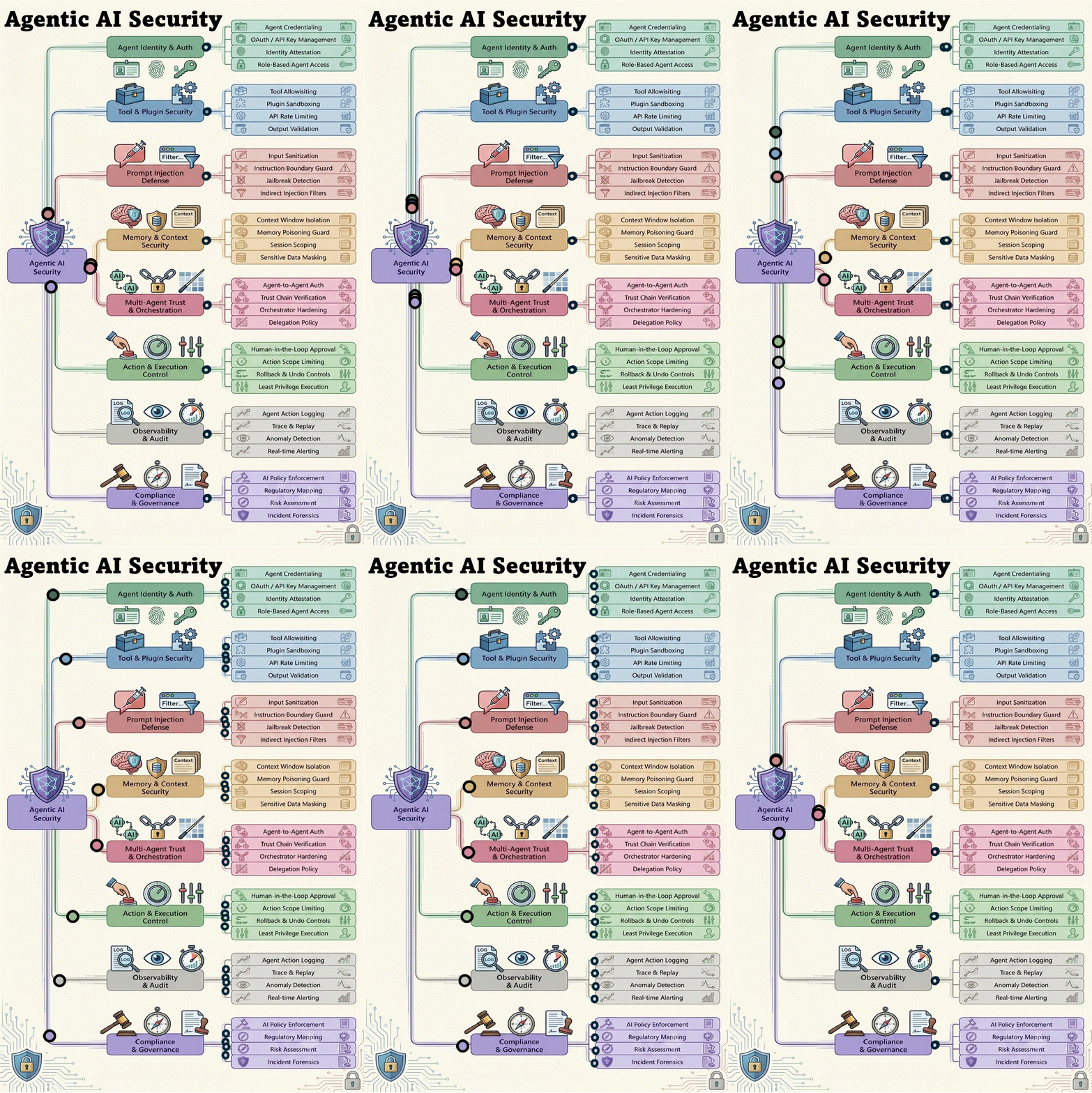
🔐 Agentic AI Security: Securing AI That Can Act
🔐 Agentic AI Security: Securing AI That Can Act We are moving from Generative AI that responds to Agentic AI that acts. AI agents can reason, access tools, call APIs, interact with systems, make decisions, and execute actions autonomously. This creates huge business opportunities , but also introduces a completely new attack surface. The Agentic AI Security market is projected to grow from USD 1.65B in 2026 to USD 13.52B by 2032, at a 42% CAGR. So, what needs to be secu
Mohamed Essmat
Aug 241 min read


🔐 Cybersecurity Is More Than Technology , It’s an Integrated Ecosystem
🔐 Cybersecurity Is More Than Technology , It’s an Integrated Ecosystem A strong cybersecurity program is not built around a firewall, SIEM, EDR, or individual security tools. It connects People, Processes, Technology, Governance, and Resilience. A mature cybersecurity ecosystem should cover: 🔹 Data Security : Classification, DLP, encryption & sensitive data protection 🔹 Network Security : DDoS, NAC, VPN & network monitoring 🔹 Endpoint Security : Asset visibility, malware
Mohamed Essmat
Aug 201 min read
bottom of page